If you’ve been managing your inventory with Stocky, you already know what’s coming – . Shopify confirmed Stocky’s end-of-life date is August 31, 2026. And for many merchants, the pain started long before that deadline.
Key features like inventory transfers and min/max forecasting were removed back in July 2025. The app was pulled from the Shopify App Store on February 2, 2026. If you’re still relying on what’s left, you’re running your business on a tool that’s actively winding down.
This guide covers what’s changing, why Shopify’s built-in tools probably aren’t enough, and how to make a smooth transition to a system built for growing retail brands.
What’s Happening to Stocky? The Full Timeline
Here’s the shutdown timeline every merchant needs to know:
- July 7, 2025: Stocky stopped supporting inventory transfers between locations and min/max forecasting. If you relied on those features to trigger reorders or move stock between warehouses, those workflows broke months ago.
- February 2, 2026: Stocky was removed from the Shopify App Store. No new installations. No reinstalls.
- August 31, 2026: Complete shutdown. Stocky stops working. All Stocky APIs will stop too, meaning any third-party tools connected to Stocky will break.
One detail that catches merchants off guard: your historical data (purchase orders, stocktakes, inventory records) will not automatically migrate to Shopify. You need to manually export everything before the deadline. And supplier data cannot be exported from Stocky at all. If you have vendor relationships configured inside the app, that information needs to be recreated manually in your new system.
If Stocky is still part of your daily workflow, the time to act is now.
Can Shopify’s Built-In Inventory Tools Replace Stocky?
Shopify’s official guidance is to migrate to Shopify Admin’s inventory features. For merchants who only need basic stock tracking, simple transfers, and quantity adjustments, should explore Shopify’s built-in tools.
But if your business depends on any kind of operational depth, “basic” isn’t going to cut it. Merchants in Shopify’s community forums have been vocal about the gaps:
- No “fill shelves” or restock-to-target functionality
- Vendors become “suppliers,” which breaks existing workflows
- No automated purchase order creation based on sales velocity
- No forecasting or demand planning of any kind
- No barcode printing within transfers (requires a separate app)
- Limited multi-location management for brands with warehouses and retail stores
For brands with multi-location operations, wholesale channels, or a product catalog with lots of variants, that’s a real problem.
What Growing Brands Actually Need From Inventory Software
Before jumping into alternatives, it’s worth asking: what does your business actually need from an inventory system?
- Real-time stock visibility across every channel and location: Whether you sell through Shopify, Amazon, wholesale portals, or your own B2B store, inventory needs to be accurate and synced everywhere, all the time.
- Demand forecasting you can trust: Not just basic reorder points, but forecasting that accounts for seasonality, sell-through rates, and sales velocity so you can plan purchases with confidence instead of guessing.
- Automated purchase orders and vendor management: A system that generates POs based on actual demand and manages supplier costs, lead times, and pack sizes in one place. Manually creating purchase orders doesn’t scale.
- Product variant tracking at the SKU level: Whether you deal with sizes, colors, materials, or other product attributes, you need to see what’s moving and what’s sitting so you can adjust your buying decisions.
- Multi-warehouse management with smart allocation. Transfers between locations, low-stock alerts, and allocation logic that prioritizes orders by due date and customer priority.
- Integrated order management and fulfillment. From the moment an order comes in to the moment it ships, your team needs a streamlined workflow, not a patchwork of apps.
If Stocky was handling even half of this for you, Shopify Admin alone won’t fill the gap.
How ApparelMagic Fills the Gap
Most Stocky alternatives on the market right now are general-purpose inventory apps. They handle stock tracking and basic transfers, but they weren’t built for operational complexity.
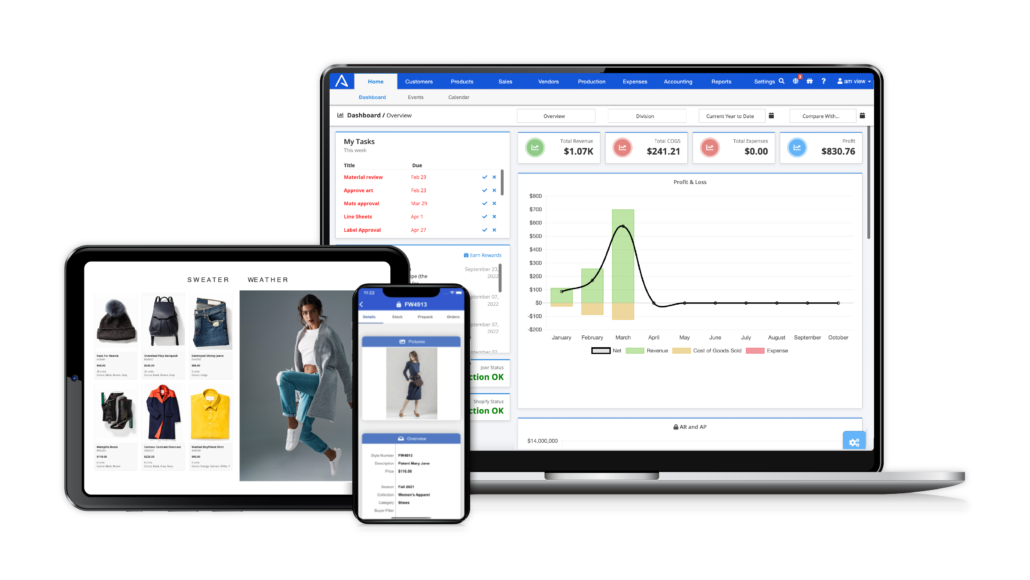
ApparelMagic takes a different approach. It’s a full ERP platform that covers inventory, sales, purchasing, manufacturing, accounting, and CRM in one system. Originally built for the fashion industry (where managing thousands of size/color/style variants is the norm), it’s designed to handle the kind of complexity that Stocky and Shopify Admin simply can’t.
Here’s what that looks like in practice.
1. Real-Time Multi-Channel Inventory
ApparelMagic manages multiple sales channels, warehouses, and suppliers from a single platform. Stock levels sync in real time across Shopify (including multiple stores), Amazon, JOOR, NuOrder, and more. When a sale happens on any channel, every other channel updates instantly.
Unlike Stocky, which only worked within Shopify’s ecosystem, ApparelMagic gives you visibility across your entire business.
2. Forecasting That Drives Better Purchasing
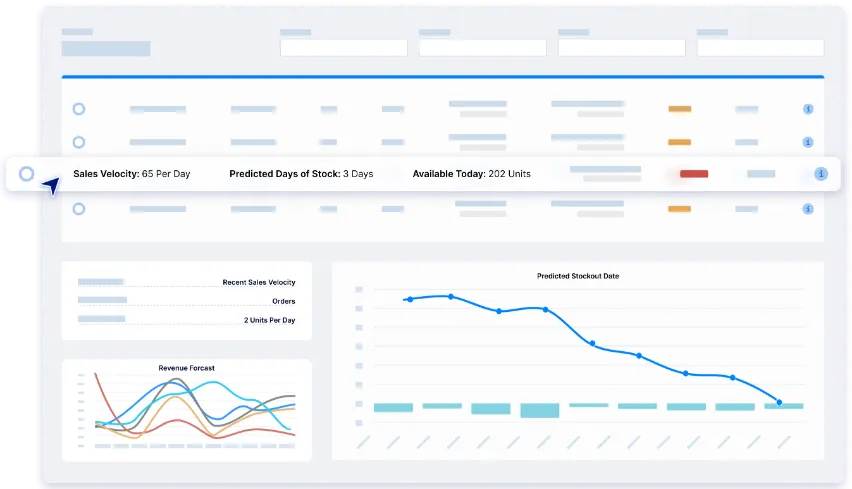
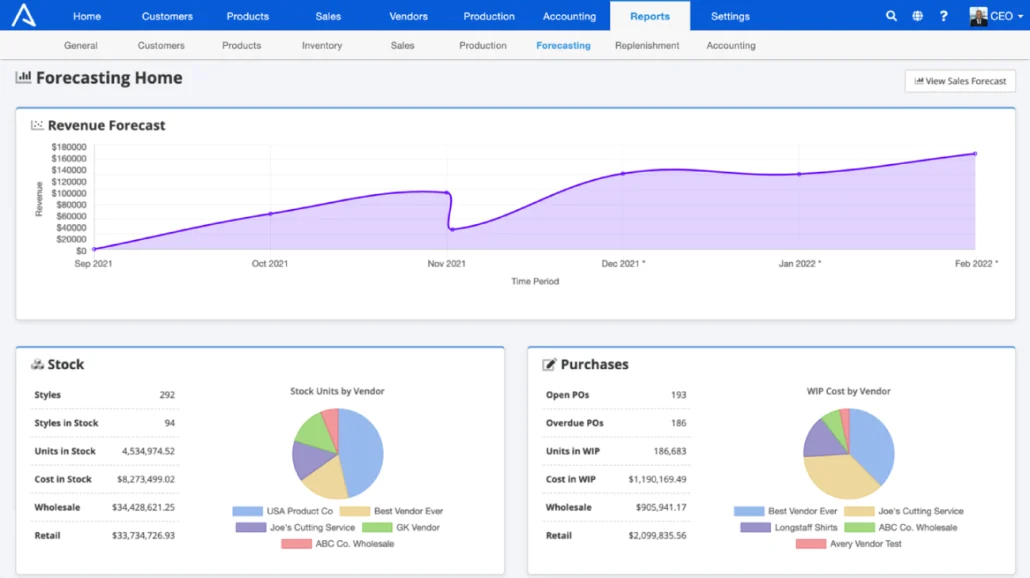
ApparelMagic uses machine learning to power forecasting and replenishment dashboards showing estimated revenue, unit sales, and quantity projections. You can drill down to the individual SKU level to see current inventory, sales velocity, and a forecasted sell-out date.
This is the kind of intelligence that helps you avoid both stockouts and overstock, two problems that hit your bottom line hard.
3. Automated Purchase Orders and Vendor Management
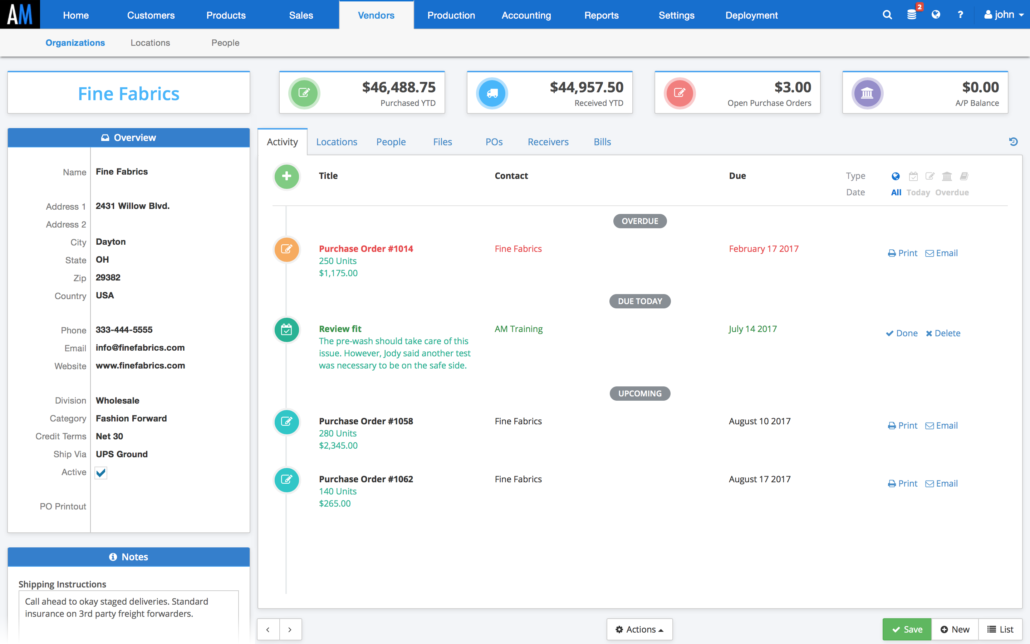
ApparelMagic automates PO creation based on actual demand signals. Track supplier-specific costs, lead times, and pack sizes. Monitor production schedules against sales deadlines. And because everything lives in the same system, there’s no risk of losing vendor data during migration (unlike Stocky, where suppliers can’t be exported at all).
4. Deep Variant and SKU Tracking
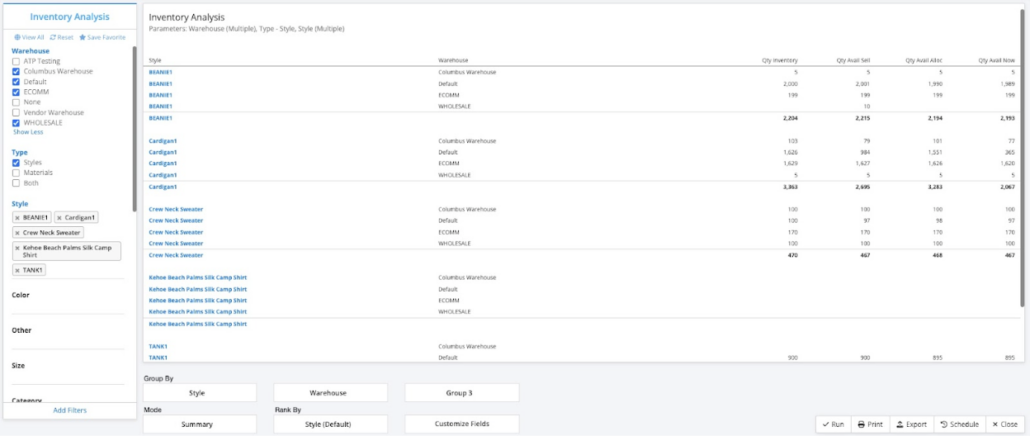
Whether your products come in multiple sizes, colors, materials, or configurations, ApparelMagic tracks it all at the SKU level. You get full visibility into what’s selling, what’s slow, and what needs to be reordered. The platform also supports bill of materials (BOM) management and tech packs for brands that manufacture or assemble their own products.
5. Multi-Warehouse and Fulfillment
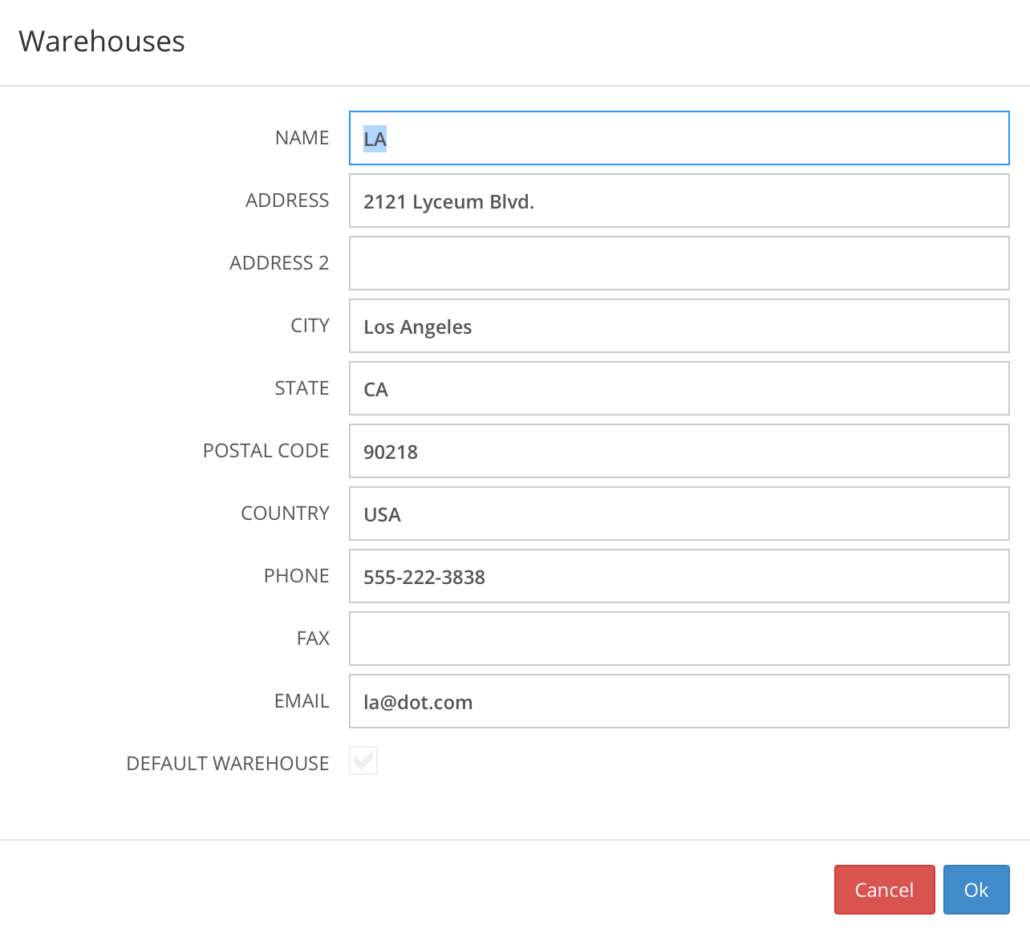
Multi-warehouse inventory with low-stock notifications, seamless transfers between locations, and syncing across B2B and B2C platforms. The pick-and-pack module supports barcode scanning, batch processing, and direct carrier integration for label printing.
6. Full ERP, Not Just Inventory
Here’s the fundamental difference: ApparelMagic is a complete ERP. Inventory, sales, purchasing, manufacturing, accounting, and CRM all live in one platform. Accounts receivable, accounts payable, general ledger, balance sheets, P&L. No juggling five separate apps, no data silos, no piecing together what should be one system.
Whether you’re a multi-location retailer, a DTC brand scaling into wholesale, or a business that manufactures its own products, ApparelMagic gives you one platform to run everything.
Don’t Wait Until August
The merchants who will have the smoothest transition are the ones acting now, not the ones scrambling in July.
Stocky served its purpose. But for brands that need real inventory intelligence, multi-channel control, and the operational depth to keep growing, it was always limited. Its shutdown is your opportunity to upgrade to a platform built for the way your business actually runs.
Book a free ApparelMagic demo and start your migration today →