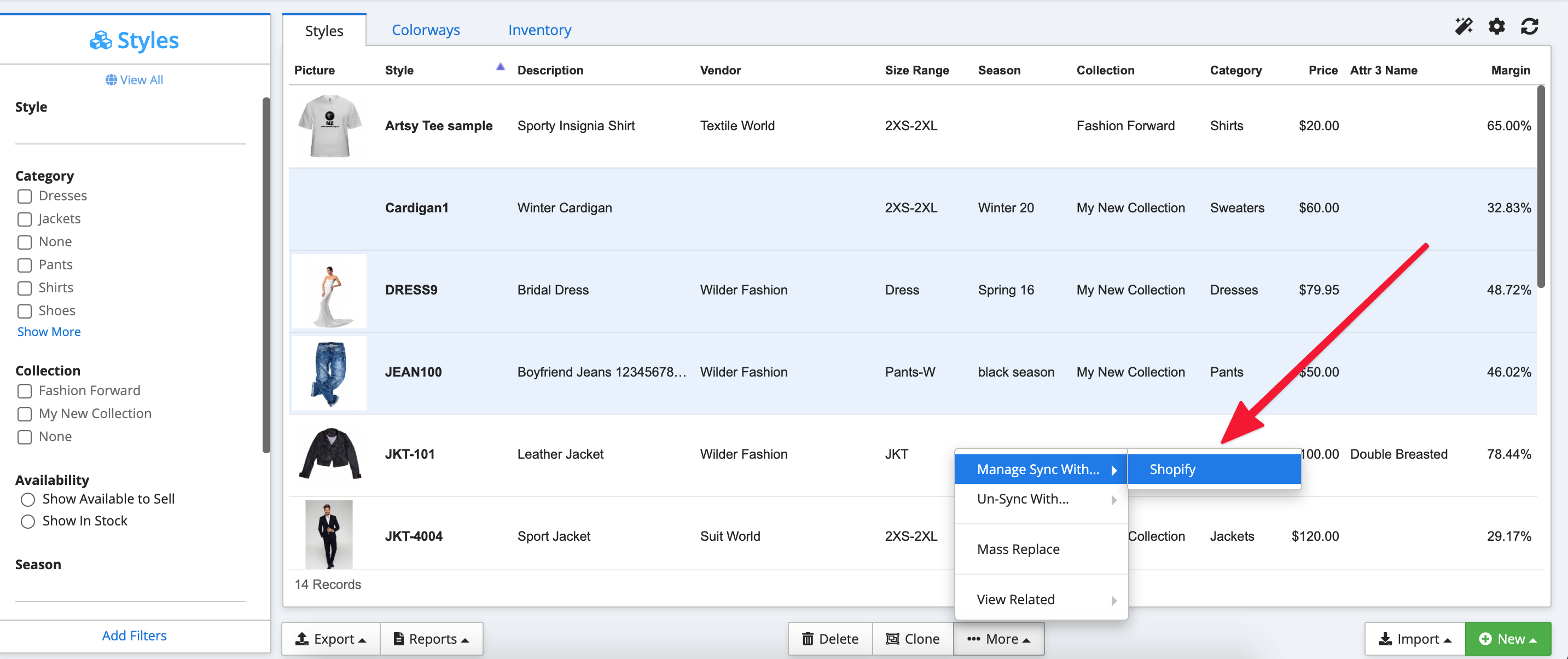
An enterprise apparel ERP is built to support complex fashion and apparel operations across products, inventory, sales, finance, manufacturing, warehouses, teams, and connected systems.
Enterprise readiness is not simply about supporting more users or processing more transactions. The software also needs to maintain visibility, control, reliable data, and connected workflows as more brands, locations, departments, channels, financial requirements, and external systems become part of the operation.
For apparel companies, that means preserving the industry-specific structure of styles, colors, sizes, seasons, collections, inventory, wholesale commitments, purchasing, production, and financial activity while adding the governance and connectivity required by a larger organization.
Enterprise Readiness Goes Beyond Company Size
Enterprise apparel ERP software should be evaluated by the operational requirements it can support rather than by a specific revenue or employee threshold.
A fashion company managing several warehouses, multiple sales channels, international production, complex financial processes, and a large technology stack can require enterprise-level functionality even if it is smaller than another company operating through a simpler business model.
What makes the ERP enterprise-ready is its ability to support that operational depth without forcing important processes into separate spreadsheets, disconnected systems, or heavily manual workarounds.
Enterprise Apparel ERP Starts With Connected Apparel Data
Enterprise functionality still depends on the same apparel fundamentals required by smaller fashion businesses, but those fundamentals need to remain connected across a much larger operation.
Product records should preserve relationships between styles, colors, sizes, variants, seasons, and collections. Inventory should connect with orders, allocations, incoming supply, warehouses, and fulfillment. Purchasing and production should reflect demand and customer commitments, while financial information should remain connected to sales, inventory, vendors, and operational activity.
At enterprise scale, the challenge is not simply storing more information. It is maintaining those relationships consistently as more teams, locations, channels, and systems depend on the same data.
Multi-Brand and Multi-Division Operations
Enterprise fashion organizations may operate several brands, divisions, product lines, or business units within the same broader company.
That creates a need for both centralized visibility and operational separation. Leadership may need information across the entire organization, while individual teams should only work with the brands, warehouses, customers, or business functions relevant to their responsibilities.
An enterprise apparel ERP should therefore support organizational complexity without fragmenting the underlying data. Products, users, locations, reporting structures, workflows, and financial activity may need different levels of access or control while remaining part of the same operational environment.
Enterprise Inventory Across Locations and Channels
Inventory management becomes significantly more demanding when an organization manages thousands of SKUs across warehouses, 3PLs, ecommerce, wholesale, retail, marketplaces, and other channels. Teams need more than a total stock number. They may need to understand inventory by style, color, size, location, availability, allocation, incoming supply, customer commitment, and fulfillment status.
Wholesale and direct-to-consumer demand can compete for the same inventory, while different warehouses or fulfillment partners need to remain synchronized. Enterprise apparel ERP software should maintain a consistent inventory model across those workflows so teams can understand availability without reconstructing the picture from multiple systems.
The goal is not simply stock visibility, but reliable inventory control across a larger network of products, locations, commitments, and channels.
Permissions, Governance, and Auditability
As more people use the ERP, access cannot remain unrestricted. Different teams may require different levels of visibility into inventory, costs, customers, orders, financial information, production records, or administrative settings. For example, a sales user may be able to view customer and order information without seeing product costs, while a finance user may need access to receivables, payables, and financial reports. Managers may also need approval rights that other users do not have.
Enterprise ERP software should support configurable permissions, approval structures, and auditability so organizations can control who can view, create, approve, or modify information. These controls help protect sensitive data, reduce the risk of unauthorized changes, and create more consistent processes across teams and departments.
Auditability adds another layer of governance by making it easier to understand who performed an action, when it happened, and how records changed over time. At enterprise scale, these controls are not simply administrative features. They help establish accountability, support internal policies, and give the organization greater confidence in how critical business information is managed.
Financial Control at Enterprise Scale
Financial requirements become more demanding when an apparel company operates across multiple channels, customer types, locations, currencies, or business units. Teams may need deeper visibility into accounts receivable, accounts payable, product costs, margins, vendor obligations, purchasing, reconciliation, general ledger activity, balance sheet information, and P&L performance.
An enterprise apparel ERP should connect those financial processes with operational activity rather than treating finance as a separate reporting layer. Margin analysis becomes more useful when it reflects product costs and sales activity, receivables become more actionable when they connect with customer and order history, and purchasing decisions become more informed when teams can evaluate inventory requirements alongside financial impact.
The more complex the organization becomes, the more important that connection between operations and finance is.
Manufacturing and Supply Chain Complexity
For apparel companies involved in manufacturing, enterprise ERP requirements extend well beyond finished-goods inventory. Teams may need to manage raw materials, bills of materials, contractors, factories, vendors, work-in-progress, production stages, purchase orders, lead times, expected completion dates, incoming inventory, and customer delivery commitments.
These processes are highly connected. A production delay can affect inventory availability, wholesale orders, future collections, cash flow, and purchasing decisions. Enterprise apparel ERP software should help preserve those relationships rather than requiring production teams to manage critical workflows outside the main operational system.
This becomes particularly important for global supply chains where several suppliers, factories, countries, and logistics partners may contribute to the same product lifecycle.
APIs and Integrations as Enterprise Infrastructure
Enterprise apparel businesses rarely operate through a single application. Ecommerce platforms, marketplaces, warehouse management systems, 3PLs, EDI networks, B2B systems, shipping providers, CRM platforms, analytics tools, financial applications, and other specialized systems may all need to exchange information with the ERP.
At that scale, integrations are not simply convenient add-ons. They become part of the operating architecture. An enterprise-ready apparel ERP should provide strong API and integration capabilities so data can move between systems while the ERP remains a reliable operational foundation.
This also gives the organization more flexibility to change individual platforms over time without replacing the ERP every time another part of the technology stack evolves.
Supporting Global Apparel Operations
International operations introduce additional requirements around currencies, warehouses, suppliers, customer groups, regional teams, and different operating processes.
An enterprise apparel ERP should provide enough flexibility to support those differences while maintaining consistent operational data across the organization.
A global fashion company may need different teams to work within different regions while leadership maintains broader visibility across the business. Purchasing may involve international suppliers, inventory may be spread across several countries, and financial workflows may need to support multiple currencies.
The ERP therefore needs to balance global visibility with the operational differences that exist between markets.
AI and Automation at Enterprise Scale
Enterprise organizations also face a different information problem: as operational data grows, it becomes increasingly difficult for teams to manually monitor every report, condition, and exception. AI and automation can help by monitoring recurring conditions, identifying changes that require attention, answering operational questions, and supporting repeatable workflows.
The most useful enterprise AI capabilities work with the same governed operational data already inside the ERP. That allows the system to understand inventory, orders, customers, purchasing, finance, and product activity in context rather than analyzing isolated exports. ApparelMagic Intelligence is one example of this direction, adding capabilities such as specialized AI Agents, on-demand assistance, external AI connectivity, configurable agent workflows, and product development tools on top of apparel ERP data.
For enterprise organizations, these capabilities can extend automation across departments while continuing to use the permissions and operational controls already established in the ERP.
Why Apparel-Specific ERP Still Matters at Enterprise Scale
Becoming an enterprise organization does not remove the need for apparel-specific functionality. Large fashion businesses still manage styles, colors, sizes, seasons, collections, wholesale commitments, production, inventory allocations, raw materials, and complex relationships between products and supply.
In many cases, those requirements become more important as the organization grows because the number of combinations, teams, warehouses, brands, and dependencies increases. An enterprise platform should not force the business to choose between industry-specific functionality and enterprise capability.
The stronger approach is apparel-specific software that also provides the control, financial depth, connectivity, governance, and scale required by a complex organization.
Enterprise-Readiness Checklist for Apparel ERP Software
When evaluating whether apparel ERP software is truly enterprise-ready, look beyond the size of the vendor or the length of its feature list.
Ask whether the platform can:
- Support multiple brands, warehouses, channels, and business units
- Maintain apparel-specific product and inventory structures at scale
- Provide strong permissions, approvals, and auditability
- Connect financial, manufacturing, and supply chain workflows
- Integrate with a broader technology ecosystem through APIs
- Support global operations, automation, and AI without fragmenting the ERP
Enterprise readiness comes from how these capabilities work together. A system may support individual enterprise features but still create operational fragmentation if the underlying data and processes are not connected.
Final Thoughts
Enterprise apparel ERP software needs to do more than handle high order volumes or support a large number of users. It should preserve apparel-specific product and operational structures while providing the control, financial depth, manufacturing capabilities, integrations, and governance required by a complex organization.
The real question is whether the platform can keep products, inventory, sales, finance, manufacturing, warehouses, teams, and connected systems working together as enterprise requirements grow.
ApparelMagic brings those capabilities together in an apparel-specific platform built for complex fashion operations. If your organization is evaluating enterprise apparel ERP software, request a demo to see how ApparelMagic can support your business.