Running a golf apparel brand involves much more than designing polos, pants, and outerwear. Behind every collection are processes involving product development, inventory planning, wholesale distribution, and order fulfillment. As brands expand their collections and sales channels, coordinating these activities becomes increasingly complex.
The right technology can help brands navigate this complexity, but choosing the right solution isn’t always straightforward. With different types of software available, understanding their capabilities and how they fit into a business’s operations is essential for making an informed decision.
What Is Golf Apparel Management Software?
Golf apparel management software helps golf clothing brands organize and manage their business operations, bringing greater efficiency, accuracy, and visibility to their everyday processes. These tools help businesses reduce manual work, maintain reliable information, and improve coordination across departments as their operations grow.
Solutions include Enterprise Resource Planning (ERP), Product Lifecycle Management (PLM), inventory management, demand forecasting, and B2B wholesale software. Depending on their needs, brands can use specialized tools for individual processes or integrated platforms that connect multiple areas of the business.
Types of Software Used by Golf Apparel Brands
Different stages of the apparel business require different capabilities. While some companies use specialized tools for each function, others choose platforms that combine several areas of their operations.
1. Product Lifecycle Management (PLM) Software
Product Lifecycle Management (PLM) software helps apparel brands organize product development, from initial concepts through production readiness. Golf apparel collections often include performance polos, pants, shorts, and outerwear, each with different materials, colors, sizes, and technical specifications.
PLM systems centralize product information and help teams manage styles, materials, tech packs, samples, revisions, and approvals. For example, a golf apparel brand preparing its spring collection can use PLM software to coordinate fabric selections, track design changes, and confirm specifications with suppliers before production begins.
2. Inventory Management Software
Inventory management is particularly challenging for golf apparel brands because products come in multiple sizes, colors, and variations. When the same collection is sold through wholesale accounts, ecommerce stores, and physical retailers, maintaining accurate inventory information becomes essential.
Golf apparel inventory management software helps businesses track stock by style, size, color, and SKU across warehouses and sales channels. For brands selling to golf pro shops, inventory management also extends to emblems and embellishments, including custom patches and embroidery used to personalize apparel for individual accounts. It can also distinguish between available inventory, quantities committed to orders, and incoming stock. This visibility helps brands avoid overselling, identify slow-moving products, and make better replenishment decisions.
3. Wholesale and B2B Ordering Software
Wholesale distribution is an important sales channel for many golf apparel brands, particularly those supplying golf courses, country clubs, resorts, and independent pro shops. These relationships often involve account-specific pricing, seasonal pre-books, larger order quantities, and different delivery schedules.
Wholesale management software helps organize these activities through digital catalogs, line sheets, B2B ordering portals, and account management tools. For example, a pro shop might place a pre-book order before the golf season and later reorder popular styles as inventory sells through. Through a B2B ordering portal, pro shops can also select custom emblems and their placements directly when placing orders. Brands can offer the same selection of blank apparel across multiple wholesale accounts while restricting emblem visibility so each pro shop only sees the designs associated with its account. Pricing can also vary based on the selected emblems and placements, making it easier to manage customized wholesale orders.
4. Demand Forecasting and Inventory Planning Software
Golf apparel brands must plan purchasing and production before knowing exactly how much customers will buy. Seasonal demand, regional climates, product popularity, and wholesale commitments can all influence inventory requirements, making accurate forecasting an important part of managing stock.
Inventory planning software uses historical sales, current inventory, and anticipated demand to guide purchasing and replenishment decisions. For example, a brand might identify stronger demand for performance polos during warmer months and adjust purchasing quantities accordingly. These tools help businesses prepare for seasonal changes while reducing the risk of excess inventory or stock shortages.
5. Enterprise Resource Planning (ERP) Software
Enterprise Resource Planning (ERP) software connects multiple business functions within a centralized system. While specialized applications focus on individual activities, ERP platforms coordinate purchasing, inventory, sales orders, production, fulfillment, and financial management.
For golf apparel brands, ERP software provides a broader view of how products and orders move through the business. When a wholesale customer places an order, an ERP system can help teams review stock availability, allocate products, coordinate fulfillment, and maintain transaction records without repeatedly entering information into separate applications.
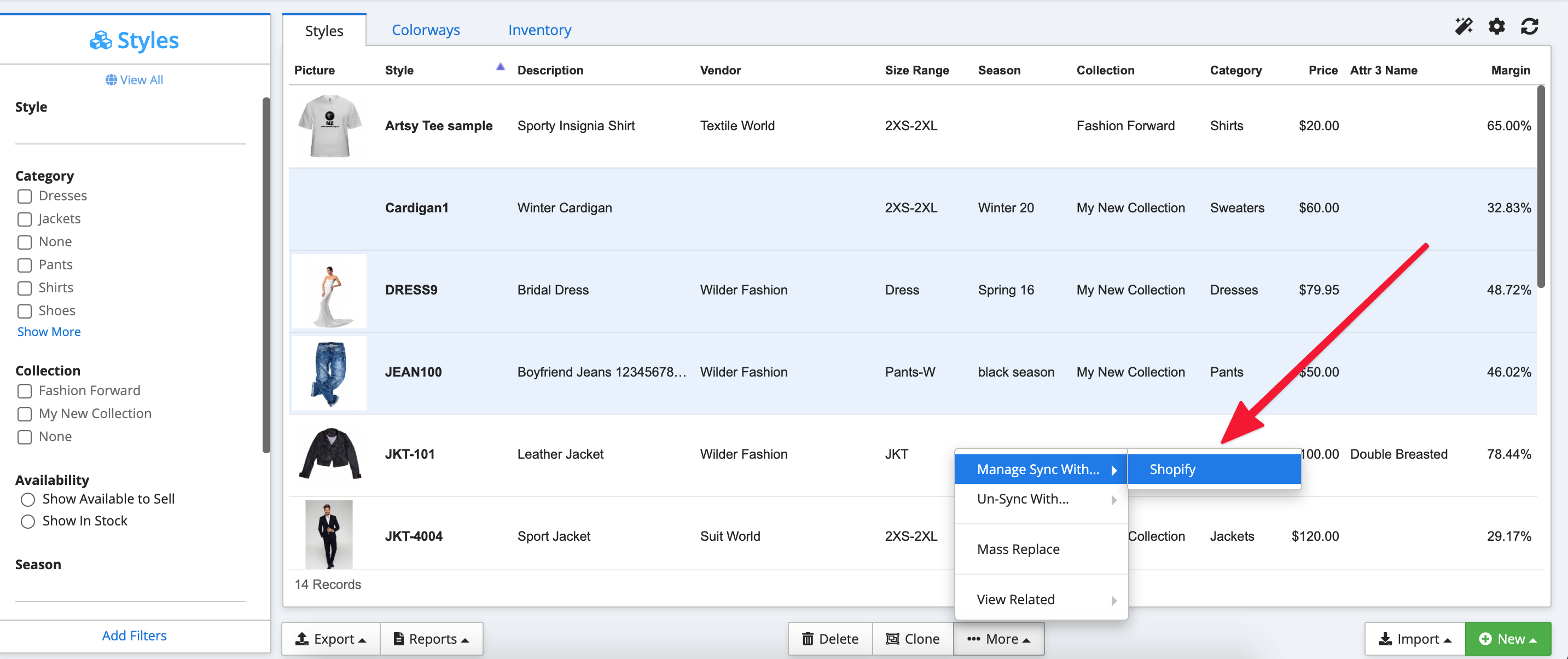
Apparel-specific ERP platforms may also include style and color management, seasonal collections, and pre-order functionality. Depending on the solution, additional capabilities such as PLM, wholesale ordering, or forecasting may be built in or available through integrations.
Key Features to Look for in Golf Apparel Management Software
The right software depends on a brand’s size, business model, and operational requirements. When evaluating solutions, businesses should prioritize capabilities that address their everyday challenges rather than simply comparing feature lists.
Important considerations include:
- Apparel-specific functionality: Support for styles, sizes, colors, product variants, and seasonal collections.
- Inventory visibility: Accurate stock information across locations and sales channels.
- Wholesale management: Tools for account-specific pricing, pre-books, and B2B ordering.
- Integrations: Connections with ecommerce, accounting, warehouse, and shipping systems.
- Reporting and analytics: Access to sales, inventory, purchasing, and operational information.
- Scalability: The ability to support additional users, products, locations, and sales channels.
Beyond functionality, brands should consider how easily employees can use the platform and whether it fits their existing workflows.
How to Choose the Right Golf Apparel Software
Choosing the right golf apparel software starts with understanding your business’s needs, challenges, and long-term goals. A growing brand selling primarily through wholesale accounts may have different priorities than one managing ecommerce, retail stores, and multiple warehouses. The right solution should address your current operational challenges while supporting the way your business plans to grow.
1. Identify Your Biggest Operational Challenges
Start by evaluating where your team spends the most time on manual tasks or struggles with limited visibility. Whether the issue involves inventory accuracy, product development, wholesale orders, or production planning, identifying these challenges will help you prioritize the capabilities that matter most rather than investing in features your business may not need.
2. Look for Apparel-Specific Capabilities
General business software may not fully support the complexities of apparel operations. Look for a platform that accommodates styles, sizes, colors, seasonal collections, pre-orders, and other workflows relevant to golf clothing brands. These capabilities should fit naturally into your existing processes without requiring extensive workarounds.
3. Evaluate Integrations and Connectivity
Consider how the software will work with your existing ecommerce, accounting, warehouse, and shipping systems. Reliable integrations help maintain consistent information across departments, reduce duplicate data entry, and prevent discrepancies between platforms. Understanding which integrations are available before implementation can also help avoid unexpected limitations.
4. Test Real Business Workflows
Request a demonstration using scenarios that reflect your daily operations, such as processing a wholesale pre-book, managing inventory across locations, or preparing a new collection for production. Testing familiar workflows provides a clearer understanding of how the software performs beyond its advertised features and whether your team can use it efficiently.
5. Consider Implementation and Future Growth
Evaluate onboarding, data migration, training, ongoing costs, and the platform’s ability to accommodate additional products, users, warehouses, and sales channels. Choosing software that can adapt as your business expands helps reduce the risk of outgrowing your system or needing to replace it as your operations become more complex.
Ultimately, the best golf apparel software isn’t necessarily the platform with the most features. It’s the one that fits your business, connects your essential processes, and gives your team the information and tools needed to operate efficiently.
Final Thoughts
Choosing the right golf apparel management software requires understanding how different systems support product development, inventory, wholesale distribution, and broader business operations. Specialized applications can address individual needs, while integrated ERP platforms provide a more connected approach to managing multiple functions.
For brands looking to bring these processes together, solutions like ApparelMagic offer apparel-specific tools for managing products, inventory, wholesale orders, and other essential workflows. With the right technology in place, golf apparel businesses can reduce administrative work, improve operational visibility, and focus more on developing products and serving their customers.
Ready to simplify your golf apparel operations? Request a demo to see how ApparelMagic can support your business.